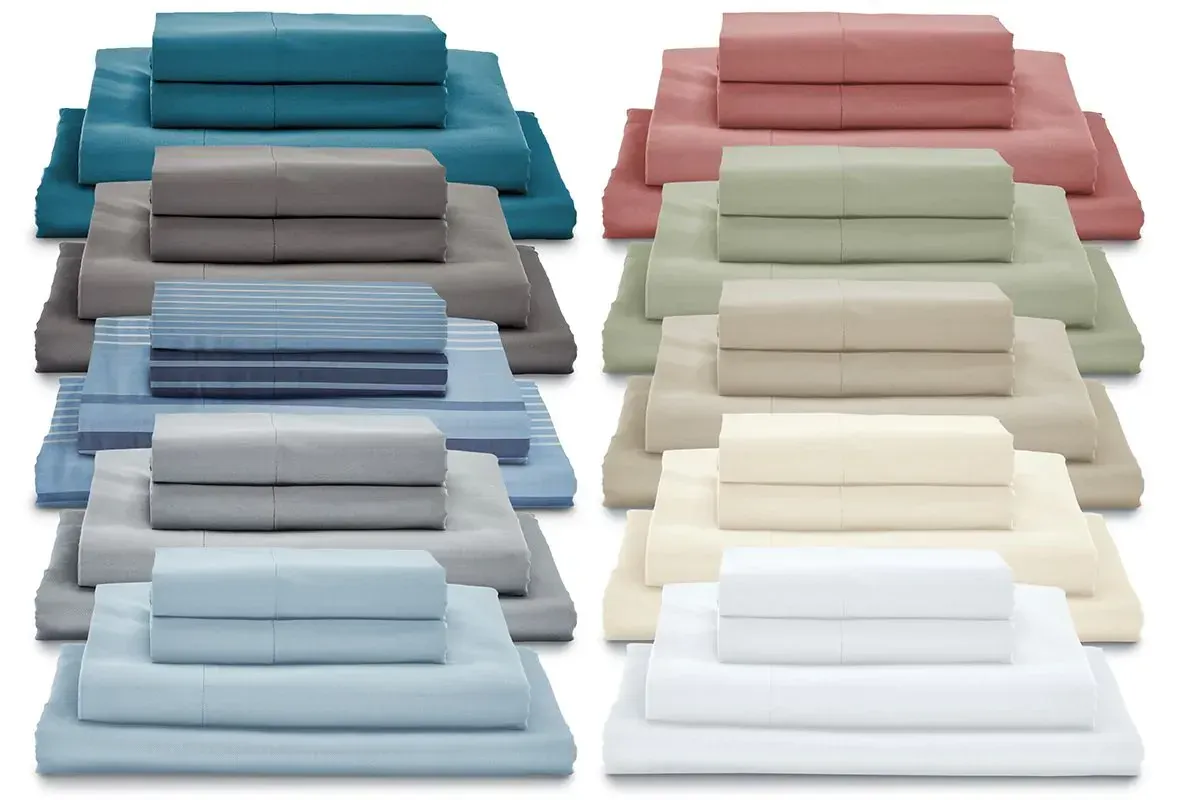

Fabric That Holds Up to Washing
Sheets and Bedding in Williston for sleep surfaces requiring durability and temperature control
Giza cotton sheets lose their structure and pill after repeated laundering when fiber quality falls below long-staple standards, creating rough surfaces that disrupt sleep. MyPillow AND MORE offers Giza cotton sheets in Williston with fiber lengths that resist breakdown during washing cycles, maintaining the smooth surface texture that prevents skin irritation and fabric snagging. The long-staple construction also reduces lint generation, which keeps washing machines cleaner and prevents the fiber buildup that shortens sheet lifespan in households that launder bedding weekly.
The bedding selection includes percale weaves that create crisp, cool surfaces suited to warmer months, and sateen weaves that produce softer, warmer finishes for cold-weather sleep. Percale uses a one-over-one-under weave pattern that maximizes airflow between threads, while sateen employs a four-over-one-under pattern that creates a denser, heat-retaining surface. Additional options include quilts and waffle blankets designed for layered temperature management, allowing you to adjust warmth without changing sheet weight.
Request a fabric comparison session to feel the difference between weave styles and select bedding matched to your sleep temperature preferences.
How Weave Structure Affects Sleep Temperature
The thread arrangement in each weave type determines how much air moves through the fabric and how much body heat becomes trapped at the skin surface. Percale's tight one-over-one pattern creates a matte finish with better ventilation, while sateen's longer thread floats produce a silky surface that reflects more heat back toward your body. This structural difference means percale sheets feel cooler at initial contact and remain breathable through the night, whereas sateen sheets warm faster and retain heat longer during sleep.
After switching to fabric matched to your temperature needs, you notice fewer disruptions from overheating or feeling too cold, and the sheets maintain their surface smoothness through monthly washing without developing the pilling that creates rough patches. The Giza cotton fiber length prevents the short-fiber migration that causes standard cotton sheets to thin and tear at stress points near fitted corners. Layering quilts or waffle blankets over the sheet base allows you to add or remove warmth without replacing the entire bedding setup when seasonal temperatures shift.
MyPillow AND MORE stocks bedding in sizes that correspond to standard mattress dimensions, from twin to California king configurations. The in-store selection allows you to handle fabric samples and compare weave textures before purchasing, which eliminates the guesswork that comes from online descriptions that cannot convey actual surface feel. Proper bedding selection considers both fiber quality and weave structure, as high thread count alone does not determine durability or temperature performance when short fibers and loose weaves compromise fabric integrity.
What Property Owners Usually Ask
Bedding questions in Williston often focus on matching fabric types to sleep conditions and understanding how construction affects long-term performance.
What causes sheets to pill after washing?
Pilling occurs when short cotton fibers break free from the weave and tangle into small balls on the fabric surface, a problem that long-staple Giza cotton avoids by using fibers that remain anchored in the weave structure through repeated wash cycles.
How do percale and sateen sheets feel different during sleep?
Percale produces a crisp, cool surface with a matte finish that stays breathable, while sateen creates a softer, warmer feel with a slight sheen that traps more body heat, making weave selection important for temperature-sensitive sleepers.
When should bedding be replaced rather than continued in use?
Replace sheets when fabric develops thin spots that tear easily, when elastic corners lose grip and no longer stay fitted, or when repeated washing causes fibers to break down enough that the surface becomes rough despite proper laundering.
Why does cotton quality vary between sheet brands?
Cotton fiber length determines strength and durability, with long-staple varieties like Giza producing smoother, longer-lasting sheets compared to short-staple cotton that pills quickly and loses structural integrity after minimal washing.
How does Williston's dry climate affect bedding maintenance?
Low humidity reduces the moisture that helps cotton fibers remain flexible, so using a humidifier during winter months can prevent the brittleness that makes sheets more prone to tearing and static buildup during cold-weather sleep.
MyPillow AND MORE provides complete bedding setups including sheets, quilts, and layering blankets for immediate purchase. Stop by the Williston store to compare fabric samples and discuss bedding combinations that match your temperature regulation needs and washing frequency.