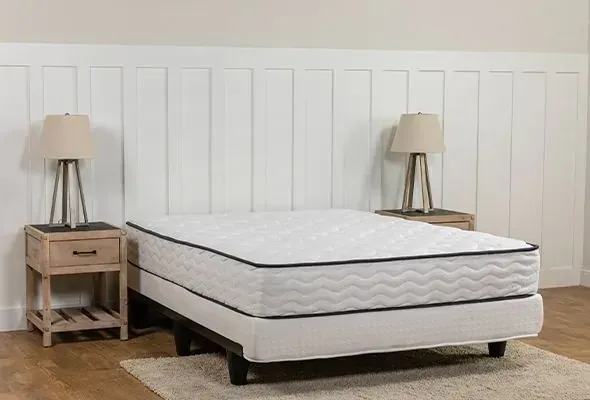

Sleep Surfaces Built for Your Body
Mattresses in Williston for side sleepers, back sleepers, and anyone seeking pressure relief without sacrificing support
My Pillow and Mattress Store carries mattress brands like Helix, Puffy, MLILY, and natural lines made with latex, wool, and cotton across its Williston location. The selection spans hybrid construction, memory foam layers, and organic materials designed to address different sleep positions and body types. You can test each mattress in the store to evaluate firmness, surface feel, and how your hips and shoulders settle into the material.
The process involves comparing materials and support systems side by side—whether you need cooling features for warm sleepers, pressure relief for joint sensitivity, or edge support for sitting on the mattress surface. Staff guide you through differences in coil gauge, foam density, and natural fiber layering so you understand what each material contributes to long-term durability and nightly comfort.
Schedule an in-store appointment to test mattresses based on your preferred sleep position and firmness requirements.
What Proper Mattress Selection Requires
Choosing a mattress begins with identifying your primary sleep position and any areas where you wake up with stiffness or discomfort. Side sleepers typically need more contouring around the shoulder and hip to prevent pressure buildup, while back sleepers require firmer lumbar support to maintain spinal alignment. Stomach sleepers benefit from a flatter surface that prevents the midsection from sinking and creating an unnatural arch in the lower back.
Once you test multiple options at My Pillow and Mattress Store, you notice differences in how quickly foam rebounds when you shift positions, how much motion transfers across the surface when your partner moves, and whether edge coils compress or hold firm when you sit. Hybrid models combine pocketed coils with foam or latex layers to balance bounce with contouring, while all-foam mattresses isolate motion but may retain more body heat unless designed with cooling gel or ventilated construction.
Mattress longevity depends on material density and how the support core maintains its shape under repeated compression. Natural latex resists sagging longer than standard polyfoam, and high-coil-count innersprings distribute weight more evenly than low-gauge wire systems. You also need to consider mattress height if your bed frame has specific clearance limits or if getting in and out of bed requires a lower profile.
Questions Before Starting Your Mattress Search
Customers in Williston often ask about firmness levels, material differences, and how to test mattresses effectively before purchasing.
What does firmness rating actually measure?
Firmness describes how much the surface resists compression when you lie down, typically rated on a scale from soft to extra firm. Your body weight and preferred sleep position determine which rating keeps your spine aligned without creating pressure points at the shoulder or hip.
How do hybrid mattresses differ from all-foam construction?
Hybrid mattresses use a coil support base topped with foam or latex comfort layers, providing more bounce and airflow than solid foam blocks. All-foam models isolate motion better and contour more closely but may sleep warmer unless built with cooling technology.
What should I focus on when testing a mattress in-store?
Lie in your normal sleep position for at least five minutes to let your body settle into the material. Check whether your spine stays level, whether your hips or shoulders feel pressure, and whether you can roll over easily without fighting the surface.
Why do organic mattresses cost more than synthetic options?
Natural latex, organic wool, and certified cotton require more expensive sourcing and processing than petroleum-based foams and polyester blends. These materials also resist dust mites and off-gassing without chemical flame retardants, which adds to production costs.
When should I replace my current mattress?
Visible sagging in the center, waking up with new stiffness, or needing to avoid certain sleeping positions because of discomfort all indicate the support core has degraded. Most mattresses lose structural integrity after eight to ten years depending on material quality and nightly use patterns.
My Pillow and Mattress Store maintains a testing area where you can compare brands and materials using your actual sleep position and time frame. Visit the Williston location to evaluate mattress options with staff who explain construction differences and match recommendations to your body type and comfort needs.